The Secret Language of Comics

A Dress Fit for Silvermist
dress image and waterfall image

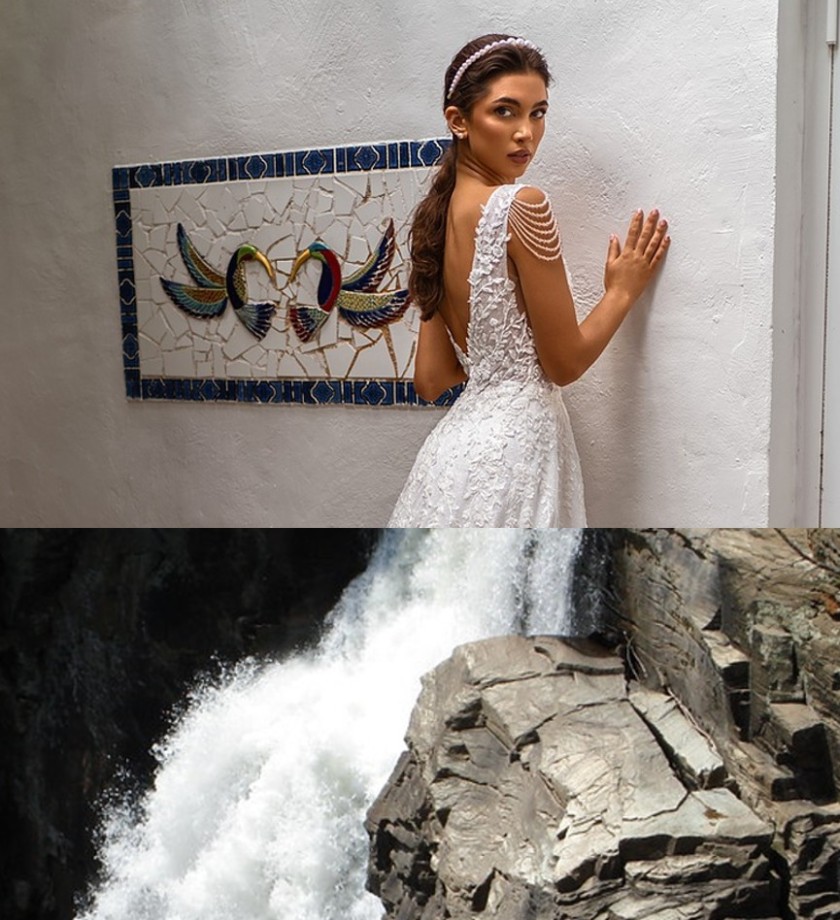
The combophoto assignment was kind of difficult for me because I am very anal about details, so I spent a long time searching the internet for pictures I could use that would line up well. For my initial idea, I wanted to involve birds in some way. I love bird wings because they’re beautiful, especially the underside where you can really notice how the bird’s feathers fan out. I wanted to combine a bird with flowers at first but that had its own set of deterrents. The first was that the flower images I could find had too many flowers in them. Because of this,  either the background of the image seemed too busy or the flower was too small for it to match up neatly with my selected bird images. Then I thought of combining the bird photo with fire or smoke to make a type of phoenix, but when searching for creative commons images, the majority of the ones involving fire were of forests being burned down (which looking back could have been really symbolic to combine an image of a bird with an image of its home being burned down, so as I write this I kind of regret not sticking with this idea). This resulted in too much smoke in the images so it was hard to see the actual fire, or similar to the flower issue, the background was too busy with all the trees and people that were trying to put out the flames. Moving on from the fire, my next idea was to use water, specifically a waterfall, and try to match it up with the tail feathers of a bird so that I could keep my favorite part (the underside of the wings) visible. Unfortunately, this idea didn’t work out because I couldn’t seem to find a bird that matched the color of the water well enough for it not to bother me.

Finally, I scrapped my bird idea and instead focused on the waterfall because it reminded me of the skirt of a wedding dress. After finding a waterfall with a cool water pattern I looked for dresses that closely matched the color and cropped the images together.  Despite the struggle I went through to get my final result, I’m happy with it because sketching odd dress designs was a staple activity of my childhood. I went through a long phase of thinking I would be a dress designer (this phase was initiated by watching Tinkerbell and seeing the fairy dresses made from leaves and flowers). I don’t think my final image conveys anything serious, rather it’s a homage to my childhood self and her generic yet enjoyable aspirations.

A Symbiotic Story

While creating my comic I struggled to come up with an idea at first. I’m a very wordy person and most of my stories tend to run long, so writing a short one with only three panels was really difficult for me. I ended up creating a comic about a clownfish trying to escape a shark by hiding in the tentacles of a sea anemone, thus beginning a symbiotic relationship with the creature. With the idea for the story in mind, the composition wasn’t very hard to figure out. Because I only had three panels to tell the story, the composition had to be very straightforward in order to fit all the important details. The first panel introduces the conflict of the story: a clownfish is being hunted by a shark. The second panel shows the middle: the clownfish finds a solution to his problem and asks the sea anemone for help. Then finally the third panel is the conclusion: The shark lost the clownfish and the clownfish and sea anemone become partners.

This assignment was different than most writing I do because I had to incorporate pictures in my storytelling in a way I normally don’t. Especially because we had so few panels, the images had to be the primary storytelling elements. This, unlike most writing assignments, forced me to extremely minimize my word usage. I tend to write long, detailed stories and for this assignment, I had to pick and choose which details to include in order to efficiently use the space while still getting the same impact. Overall I found the triptych comic challenging, but enjoyable.

Reflection for Literacy Narrative Part III

The third literacy narrative was a complete redraft compared to my first literacy narrative: based on Professor’s advice and peer review, I was able to reconstruct the story and narrow the focus down to my self-exploration to words and poetry, rather than a random collection of thoughts in some unrelated areas. During this whole process of first trying to write a literacy narrative, condensing my history, then re-organizing the ideas into a more well-rounded story with a controlling idea, I practiced writing skills and recursively experimented with drafting, revision and reflection. 

Weaving both the narrative III and the comics version taught me the intricate difference through practice. In the process of extracting a narrative from a detailed essay, I realized I had to choose the key turning points and incidents to draw instead of picturing every single word of the essay on the page; on the other hand, I realized I had to imagine the visualization in order to resonate with the reader instead of just utilizing the combination of words – a genre I’m much more used to – like the essay did. Furthermore, I realized that visual form is a better and easier way to present my impression of the works I mentioned in the text. In literacy narrative, words have limited power to express my feeling toward a certain poem since I wasn’t filling the entire page with a detailed analysis; however, in comics, I could draw a detailed and visually dense picture to present my imagination of certain imagery which could be filled in a reasonable space. In one sentence, an alphabetical narrative could contain more literal information and detail, but a visual narrative is extremely efficient in conveying imagination, resolution, and perspective. During the process, I experimented with visual thinking and creation using digital technology for the first time, then incorporating and publishing it in public space via WordPress; moreover, collaborating with classmates was a decisive factor that renewed my narrative from I to III, thereby benefiting from collaboration skills.

Link to Literacy Narrative Part III:

Reflection for Journey to the Words in Comics

As I had re-drafted my entire literacy narrative, I finished literacy narrative part III before literacy narrative II, so I could think through and construct the story in words before abstracting it into comics, a genre I’m less familiar with.

Given fully composed essay on my exploration to words, I experienced greater challenge than I expected to encounter to select what and how to draw, and then seamlessly weave the different scenes into a thematic story, and thus I realized I’ve always underestimated the difficulty of doing so before as the reader. In practice, I chose the major turning points of the entire narrative: first acquaintance, reading misty poems with Geheim, introduction to English poetry. ; just illustrating these moments made me realize that my comics conveyed more emotion, value and sensations rather than trivial details as my essay would present.

I gradually begin to classify the images into 2 categories, the ones about my understanding of poetry and the ones telling my real life process. I really enjoyed drawing the first kind because I could express my impression of the poem in an artistic, visual way, and the images turned out good. On the other hand, illustrating a real life process was more technical and a greater challenge. I experimented the form of quadriptych, learned in one Sunday Sketch, to illustrate my interaction with Geheim, and compacted our story into one dense page with four closely interconnected panel. However, the disadvantage was that I haven’t fully utilized the webblock design of WordPress, so I “listed” pages in linear order, rather than arranging them in a potential more creative manner. Lastly, since I extracted the story once I finished literacy narrative III, the comics were as literal dense as it was visually impactful – I basically imitated the ratio of Adventures in Depression, by adding a few lines of texts before each drawing, rather than putting them into the image.

In summary, experiencing both genres of creating the same story taught me through practice the intricate difference between comics and essay, and the enjoyment as well as challenges there could be in the process of visual narration.

Link for Literacy Narrative II:

https://wordpress.com/page/zihaojinengrd.wordpress.com/144

The UPS and DOWNS of Everyday Life

The conceptual issues I was trying to track were mostly how content I felt for ten consecutive days in areas such as healthiness, positivity, DCT satisfaction (very important), and weather satisfaction. I divided the categories and color-coded depending on the duration of the mood that I was feeling. I concluded that my busiest days tend to have lower mood ratings in positivity and healthiness. This trend will most likely continue for the rest of the year. On the days when I have free afternoons, I find myself feeling satisfaction from the DCT food as well as the weather. My best guess from this is that I have time to enjoy my food and soak in the day instead of running over the chewing action and worrying about the next thing I have to do.

At the beginning of this project, I had asked myself if my positivity depended on the amount of time I spent with other people or did it depend more heavily on my schedule. Because of the unsteady exposure to other people, I was not able to fully determine whether this was the case. I did, however, find myself feeling better after those brief encounters. Some judgment calls I faced while gathering my data were mostly dealing with determining the hours I had felt a certain mood. I would encounter choices like figuring out if I had felt healthy for ten or eleven hours that day. These choices might have skewed the visual data. I chose to visualize the data in the manner I did because it personally helped me organize my understanding and saw my rating spread out clearly throughout the ten days in the different categories.

If I were to continue this project into the future, I would investigate if my moods revolved around the amount of time I spent with my friends like I previously intended. The difference would be the scheduled time so I can properly determine if those experiences affected them at all. I have found this to be a valuable tool for self-analysis. I had not realized my moods changed that drastically in such a relatively short period of time. I am interested in doing this long-term if possible.

Literacy Narrative Part 3: Ethan Cohen Reflection

This essay felt the most clear and truly showcased my progress through this process under three distinct forms of a narrative essay. I was able to implement ideas from both essays, whilst succinctly limiting superfluous information, as well as expanding on ideas in a much deeper way as was pertinent to the main ideas of my argument. I also found it very interesting to attempt to make the visual components from my comic into ideas in word form. It was a unique and new process for me, but one that really helps get to the vivid crux I am employing visually in a literary way. My analytical process was different, but I knew the same backbone of argumentative narrative would remain the same, as it is true to me in all facets. The unique difference in this essay was the ability I found to expand upon the ideas mentioned. I see the story I was telling differently, in a less profoundly different sense than expected: I found there was actually more meaning to me personally in the anecdote of summer camp than was truly uncovered in the first two attempts. Through this essay, I was able to effectively achieve a thoroughly excavated writing process, critically think and synthesize succinctly, and implement effective visual thinking throughout.

Reflection-comics

Overall, I enjoyed completing this assignment and was able to practice and reflect on what we’ve discussed over the class through the process. The first step, which was drawing the storyboard, was the most challenging yet most interesting part for me. The process of turning an essay into comics made me think about ways to change it into a more concise narrative since the ultimate goal was to effectively recount the story in the least number of pages possible. Therefore, I re-arranged some parts of the story in order to have more pages for the ending part where I could slow down, leaving the readers something to think about. It was through completing this assignment that I began to realize that the smoother the comic reads, the more time and energy the author has used to conceive the storyboard, but readers could easily underestimate the difficulty of creating a seamless narrative. In addition, compared to the essay, I tried to add some humor and interesting details in my comics as I realized that the readers could easily lose interest in pure accounts of personal experience.

As for drawing, I used procreate since it allowed me to easily make changes and add text and color. Initially, I was planning to draw a black and white comics, but later found that color would be particularly helpful to signal transitions and create a certain ambiance. For instance, in my comics, the first and last few pages were colored in pale blue while the others were in brown, thus encouraging the readers to notice the relationship between different parts and pay attention to how they are indicative of the protagonists’ personal growth.

One thing that I wish to improve on is the layout of the page. While uploading the pages onto my website, I noticed that the layout for the first few pages is really compact, while other pages are more spaced, which might disrupt the reading. Also, I wish to come up with ways to include fewer texts by coming up with more informative visuals in my future projects.

Literary Comic Reflection: Ethan Cohen

Overall, I think this assignment was truly successful in the ability to compose a text in a new mode/genre. I was able to implement stylistic choices that are unique to the literary form of comics successfully. For example, the way I created mixes of gutters and non gutter-panels, and the way I combined physical reality with fantastical elements to convey a narrative more effectively, were both stylistic elements only possible in the comic medium. I kept in mind the pages on how to create a comic, and the works of Hilary Chute in constructing a carefully designed comic. I kept in mind the idea of all-at-onceness in this comic narrative, as some pages were specifically designed to show the full expansion of my conscience towards reading at given periods in my lifetime. Although I had a full fledged first draft in comic book form, after receiving feedback from peers and redrawing panels, I was able to rework texts, make pages more packed and concise, and add significant numbers of new panels to further respond to critiques and suggestions. My ability to give effective feedback for my peers, as well as receive was a strength of mine in this assignment, and it was something I found profoundly beneficial. Even in a short morning class period, I still found I was able to give and get considerable and useful constructive feedback and comments. 

To write this literary narrative as a comic was very different in that it required significantly more amounts of visual thinking. However, I believe this style of narrative felt much more natural for me to create, as visual creativity is a natural impulse for me. Interestingly, through the drawing process, I was able to remember unique and related details to the periods of time in my life I was describing. In this way, it was a much more descriptive way of getting “the meat” out of the general story structure I was describing. Although I had been suggested to just follow one simple period of growth and learning and drill into that one moment, I felt resistance, and an inability to leave out both ideas. Both felt very necessary to me as a writer and reader, but neither was less important. Although my interest in comic books was pivotal to reading, so was how that relatively transitioned into a love for other visual mediums, which eventually steered me away from reading. I was very happy with the final product of this project. I thought the story, the message, and the overall narrative of reading and writing as pertinent to my life was very meaningful and accurate to me. Had I had more time, I would have carefully constructed my text to be more consistent and clear, and I definitely would have loved to convey vivid colors in my story. That would be the only downside that was ineffectively demonstrated in this narrative, as colors of vivid imagination played a pivotal role in my interest in comics, and novels as a form, and very personal to me.

Parents and Dysfunction Reflection

For an assignment which, to me, was by far the most challenging and difficult, I chose to focus on what made sense to me the most from what we’ve learned and the pages that have had an effect on me. My thesis was that while Stitches was better in its choice of image, they were similar when it comes to their choice of moment and the flawlessness seen in the two pages. The similarity also lies in their upbringing. Therefore, comics was the solution for them to present their story the best way possible.

Annotating helped in making me think more about comics generally and the two pages more specifically. It made me think more critically about things that I would have just spent a second on otherwise. When it comes to the format, my English from the first place is not my strongest suit, so writing in the new format made it extremely more difficult. It changed primarily in making me revise the essay more and more. The assignment led me to shed light on topics that I would not think about. The single biggest thing I would say is how emotions/feelings could be displayed in a way much, much more effective than an actual movie.

Parents and Dysfunction

Stitches (by David Small) and Fun Home (by Alison Bechdel) are two graphic novels memoirs that describe the authors’ relations with their unusual families. I chose page 219 of Stitches and page 255 of Fun Home to find the similarities, differences, or observations that I found comparing the two. In their comics, both David Smalls and Alison Bechdel describe their upbringing and growing up with a dysfunctional family. I chose the two pages since they do an excellent job of explaining the more significant themes in both comics. The two selected pages differ in how emotions and, relating to McCloud’s framework, choice of image are displayed, with Stitches being more detailed. On page 219 of Stitches, the therapist and Small’s eyes clearly show the devastation David felt, combined with the therapist’s hesitance preparing to share how Small’s mother hates him. While reading Stitches, this was the only page (apart from David complaining to his mother about his grandmother) where I felt the emotions in a way comparable to watching a sorrowful scene of a movie. However, on page 255 of Fun Home, the feelings are more described than drawn, particularly when Bechdel notices the fear in her father’s eyes. Bechdel chose to write this as a text instead of a more detailed image showing her father’s emotions. While this might be subjective, I felt more emotions in Small’s choice of image.

   In addition, as Hillary Chute notes, “Comics is not an illustrative form, in which the words and images match, but rather one … in which the words and the images each move the narrative forward in different ways the reader creates out of the relationship between the two.” [1] In the two chosen pages, the choice of moment was reasonably similar. Both Small and Bechdel connected the dots flawlessly, making it easy for us as readers to create relationships between the words and the drawings. On page 255 of Fun Home, the three panels’ similarity from one scene to another, showing Bechdel and her father (while reading, talking, and in the car), convey the unnoticed connection between them. Noticing the fear in her father’s eyes, reading, and going to the movie made me connect what was not shown much earlier—the unexpected similarity between the two. Similarly, on page 219 of Stitches, moving to Small’s reaction and back to the therapist made me feel the tension Small felt. A strain that struck me not by looking at Small’s eyes but also at his therapist’s. While the scenes are different in terms of the way in which the message is portrayed, both share the flawlessness in moving from one panel to the other.

 When it comes to the choice of image, Stitches, compared to Fun Home, was able to deliver a more emotional effect that was exceptionally well done, especially on page 219. The choice of moment, in addition, was well-made on the two chosen pages and generally throughout the two comic books, simplifying it for the reader to understand the general theme in both. The two writers, David Small and Alison Bechdel, shared a similar upbringing: dysfunctional, immensely mysterious families. From Small not knowing about his mother’s sexuality, Bechdel not knowing about her father’s (and exploring and realizing hers, eventually), to Small realizing how his mother hates him, and Bechdel discovering her father’s unique story, a story somewhat relatable to her. Therefore, it is essential to acknowledge the extraordinary way both writers expressed their past and narratives. Comics, surprisingly, was their method of describing something that might not be describable otherwise.

  [1] Chute, Hillary. Comics for Grown-ups? from Why Comics?: From Underground to Everywhere. HarperCollins Publishers, New York, 2017.

css.php